Meditation changes the fear-centre of your brain
Mar 31, 2026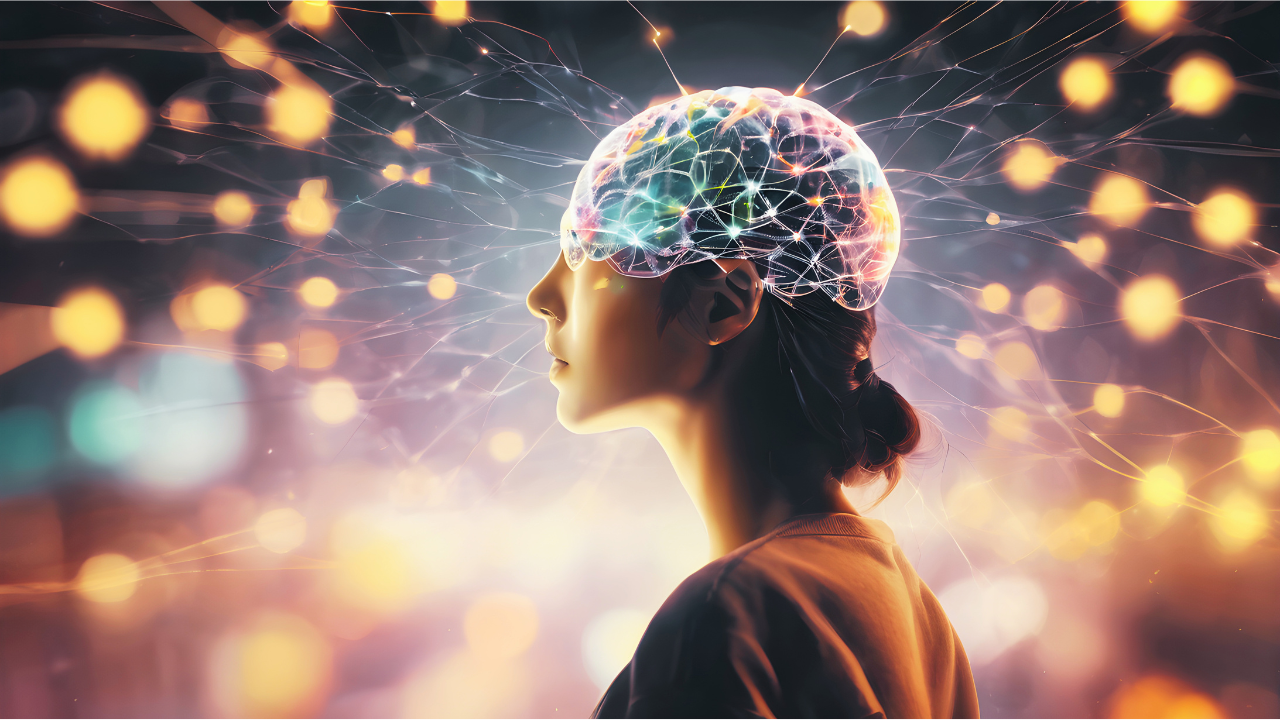
Meditation physically changes your brain. And one of the many amazing ways has to do with neurological connections between our neocortex, our conscious thinking mind, and the amygdala, our fear centre which lies in the subconscious.
If you've ever tried to sit down and calm your mind, you'll know two things. One, the instructions are simple but the actual practice is incredibly hard to do. And two, often when you're done it can feel like you didn't accomplish anything...that nothing actually happened.
However, neuroscience can now show us the unseen impact of meditation practices on the physical structures of our brain.
Because we are Embodied beings, our inner practices will always have an effect on physical aspects of ourselves. Now scientists can measure this effect with EEGs, brain scans (fMRIs), blood tests measuring changes in our biochemistry etc., and we can see the way these practices are bringing real physical changes to our bodies...making things possible that weren't possible for us before.
Recent studies have looked at the impact of meditation practice on the way the fear centre in our brain, the amygdala, functions. This is important because the way our amygdala functions will determine how we react to events in our lives and most importantly, how long that triggered stress response lasts. Thus these studies can illuminate how meditation practice might improve our deeper resilience to stressful events, change the levels of chronic anxiety we experience and help us feel more relaxed and safe in our everyday lives.
the importance of our inner physiology
Our physiology — including our posture, movement patterns, hormones & biochemistry, and neurology — is the way we plug into and process experiences of external life. This means that our physiological state is at least as important as external events in determining how we feel, how we interpret what's happening and how we perceive ourselves.
Recent science on the body-mind has shown clearly that certain physiological and biochemical states within us make certain experiences possible and block other experiences from happening. (See article: this Stress State can prevent our growth, healing and transformation) For instance, just as soil with certain nutrients allows the possibility of a seedling to grow and flourish, while a lack of nutrients can inhibit growth entirely, certain ways we hold our body and breathe, certain biochemistry and neurological patterning etc. can either allow our brains to be highly functioning, creative and broadly-focused, or shifts our brain into a distracted, narrow-minded, negatively-biased state.
We all know this because we've all had the experience of being in a really 'bad mood' where all we can think of is negative, critical thoughts about ourselves and the world. When that mood lifts, we find ourselves with the same Self and the same World, but things seem different. We remember all the good things, the complexities of situations; we shift into a state of possibility, optimism and hope. In these cases, very little has usually changed on the outside of us. Same 'Us', same World. What has changed significantly is...our physiology and biochemistry! In other words, our inner physiological state.
While we can't transcend our physiology, we can learn to harness it and guide it in a wise direction. And this is important because it means we can intentionally cultivate inner states that allow us to be more creative, thoughtful, open to different perspectives and able to consciously choose our reactions to situations.
Cultivating the conditions for our best qualities to arise
In Buddhism, there is a teaching about the natural state of our mind. It is said that the mind is naturally spacious, clear and luminous. These qualities of the mind will arise in everyone under certain conditions. Thus, meditation practice is not about trying to find wisdom or compassion or insight, but to cultivate the conditions within our body-mind for those qualities to arise naturally.
I live in a valley in the Highlands of Scotland where full arching rainbows occur all the time. As I was looking out my window the other day, admiring the gorgeous colours of the rainbow in the sky, I thought about the natural qualities of things under certain conditions. These colours of the rainbow exist within light all around us. But we cannot see them until the exact conditions of water droplets within the air split the light into its different wavelengths. This is what the teachings mean when they speak of the 'natural qualities of the mind'. They are always there, just like the colours are part of visible light, but unless the right conditions are present, we might see these qualities arise!
Living in messy real life, a calm, spacious, luminous mind can seem like a far-cry from how our mind normally feels. Our experience of our mind is more often busy, distracted, foggy, or over-active. This is because the brain is exactly like this — distracted, chaotic, foggy — under the conditions of stress biochemistry. When we shift our inner conditions, when we change our biochemistry and our brainwave patterns, new qualities of calm, expansiveness, clarity and compassion can arise.
Just like a seed needs soil, warmth, water and light to grow — these are the fundamental conditions for the potential of the seed to arise — there are certain biochemical and physiological conditions of our bodies that are fundamental to the potential of our mind to become calm, spacious and clear.
And just like all the magic of a seed becoming a living plant happens beneath the soil and beyond what we can see, the same is often true of the way we 'cultivate the conditions' inside ourselves for the inner states of wholeness, compassion, insight, peacefulness, creativity etc. to arise.
The impact of meditation practice on the amygdala & fear response
The amygdala is a small area in the limbic brain that is known as our 'fear centre'. It is actually the right amygdala that is in charge of storing memories associated with danger and experiences of threats. (The left amygdala is responsible for more complex emotional processing and positive emotions.) The right amygdala is a data-base of emotional memories and associations between certain stimuli and danger. If something in our current environment is recognised as seemingly similar to a previous threatening situation, the amygdala reacts so that we can response to this current situation more quickly and decisively to protect ourselves and stay safe. The amygdala is an essential part of our survival response, constantly evaluating the environment and scanning for potential dangers. It is also one of the densest areas of the brain in terms of neurons and neurological connections.
Anything that we consider threatening can trigger our amygdala — from a loud sound, to a person's voice, to a particular location. Because of our brain's vast capacity for imagination and visualisation, we can also trigger our amygdala by simply thinking about a threatening event or replaying a distressing memory.
Thus our ability to regulate our amygdala is essential to our mental health. When something in the environment reminds us of a traumatic past event, or we hear our sound that reminds us of a threatening situation...in other words, when we've been triggered, we need to be able to consciously assess the true reality of the situation and down-regulate that fear response if we find we are actually quite safe. This ability is also essential to reduce the refractory period of an emotional response, namely how long the chemicals of stress linger in the body and how long we 'feel' that triggered emotional state after the stressful event has passed.
Over the last 20 years, there have been a number of studies looking at the impact of meditation practice on amygdala activity and our fear response. Desbordes et al. (2012) found that 8 weeks of mindfulness-based meditation reduced amygdala activation in response to emotional scenes, suggesting that meditation improves emotional regulation. Studies, including those using mindfulness meditation practice have shown increased functional connectivity between the amygdala and the ventromedial prefrontal cortex (VMPFC) during emotional processing improving emotional regulation (Leung et al. 2015). The more neuro-connections between the neocortex and the amygdala, the more easily the conscious mind is able to regulate the fear response when we are triggered.
Numerous studies have shown the complex ways mindfulness meditation alters the functional connectivity of the amygdala, linked to decreased stress (Taren et al. (2013/2015), and even short-term mindfulness or compassion meditation training reduces behavioural and physiological responses of stress and anxiety (e.g., Hölzel et al., 2010; Pace et al., 2009, 2013; Serpa, Taylor, & Tillisch, 2014).
In one study, a group of participants trained in something called "awareness-based compassion meditation" were compared with a group of participants who were simply taught a relaxation practice. When shown a series of 'negative' images, the meditation-trained group had significantly less amygdala response, meaning they were able to down-regulate their amygdala responses more effectively (Desbordes et al., 2012). In a number of other studies, mindfulness and/or compassion meditation contributed to lower amygdala activity during negative affective processing (e.g., Klimecki, Leiberg, Lamm, & Singer, 2013; Mascaro, Rilling, Negi, & Raison, 2013b; Weng et al., 2013).
In a normal fear response, our right amygdala will initially show reduced amygdala activity followed by a 'rebound' effect of heightened activity. This is our body's attempt to manage fear in the moment while we are dealing with a crisis. After the initial crisis, however, the amygdala goes into a hyper-active state which can last much longer than the crisis itself. However, people who have practiced meditation don't seem to have such an intense 'rebound' effect (e.g., Klimecki, Leiberg, Lamm, & Singer, 2013; Mascaro, Rilling, Negi, & Raison, 2013b; Weng et al., 2013). And as we've already seen, those who have practiced meditation are also able to regulate their amygdala activation more effectively because of the higher level of neuro-connectivity.
These changes in the ability to regulate the fear response are often considered "trait" changes, meaning they persist in daily life (non-meditative states) rather than being temporary "state" changes occurring only during the meditation practice. [1, 2, 3, 4, 5, 6]
All these studies are incredible complex because the connection between the amygdala and other areas of the brain are complex and connectivity is essential for us to process our complexity of emotional responses to both positive and negative life events. We are not looking for the amygdala to *never* get activated. What we want is good neural connectivity so that fear responses can be regulated, emotions can be processed, and we don't get 'stuck' in a fear/stress state that last well beyond the event itself.
We are learning more all the time about what happens inside the brain during meditation, during highly emotional moments, during times of chronic stress and during times of joy. What all these studies on the amygdala indicate is that meditation works, that from the very beginning of practice we start to see measurable changes in the brain structures that enable us to experience new levels of emotional regulation and feelings of well-being.
This is the physiological effects of a practice we cannot 'see'.
These are the real-world qualities of the mind which arise when we cultivate certain conditions within our own minds.
We have more power than we realise to guide our inner state.
💗
Inspired to try Luminous Movement & Breathwork?
Check out the online membership. You can try it out for a month as see how you get on...
Want more Messy Luminous Being for free?
Join the mailing list for more on the science of the mind-body connection, the wisdom from the traditions of yoga and meditation, and the truth about practice in messy real life!
Tap here to sign up
(Don't worry, your information will not be shared.)